Luxembourg and the Future of Long-Term European Technology Investment
Europe's technology landscape is becoming increasingly connected, with companies, investors, researchers, and industrial partners working across national borders. Within this environment, Luxembourg has developed a distinctive position as an international financial centre and a base for investment activity across Europe. For Rajat Khare Luxembourg represents more than a location; it is part of a broader European ecosystem where capital can connect with technology companies developing solutions for complex industrial and social challenges.
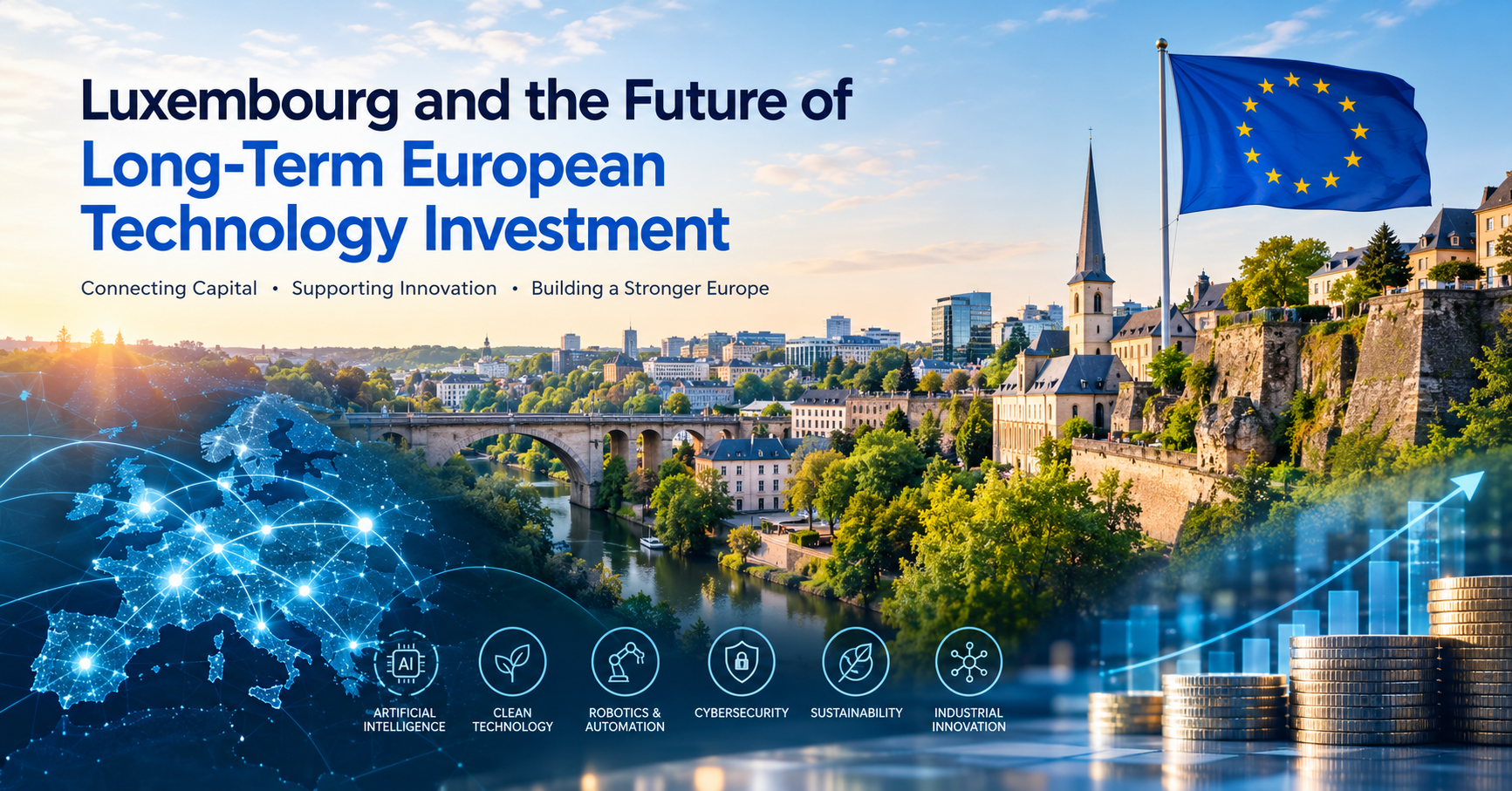
The role of Luxembourg becomes particularly interesting when looking at deep-tech businesses. These companies often require more than an initial funding round. They may need years of technical development, specialist talent, international partnerships, regulatory understanding, and access to new markets before their technologies reach their full commercial potential. This creates an important connection between European technology companies and investors prepared to take a longer view.
Luxembourg's Place in European Investment
Luxembourg's position in Europe has been shaped by its international financial sector and its connections with businesses and investors from different markets. Its location at the centre of Europe also provides proximity to major European economies while maintaining a highly international business environment.
For technology investors, this cross-border character can be valuable. European technology companies frequently operate beyond the country where they were founded. A startup may have engineering teams in one country, customers in another, manufacturing partners somewhere else, and investors located elsewhere in Europe.
This interconnected structure makes access to international capital increasingly important. Luxembourg can function as a meeting point between these different parts of the European investment landscape.
The Financial Express profile of Rajat Khare describes Boundary Holding as a Luxembourg-based investment firm founded in 2017 and focused on deep-tech companies addressing significant societal challenges. This provides one example of how Luxembourg can serve as a base for investment activity that extends beyond the country's own borders.
Connecting Capital With European Technology Companies
Deep-tech investment is different from investing in businesses where products can be developed and launched quickly. Technologies involving advanced engineering, industrial systems, healthcare, automation, energy, or sophisticated digital infrastructure may require substantial development before they can reach large markets.
The journey from technical concept to commercial business can involve several stages. Founders may first need to prove that the technology works. They then have to refine the product, establish reliable operations, attract customers, build partnerships, and expand into additional markets.Capital therefore plays a role beyond simply providing money at the beginning of a company's journey.
A Luxembourg-based venture capital firm with an international outlook can potentially connect European founders with networks, expertise, and opportunities beyond their domestic markets. The value of such relationships can become particularly relevant when technology companies begin expanding across borders.For European deep-tech businesses, international investors can also provide a broader perspective on markets, customers, partnerships, and commercial opportunities.
Why a Long-Term View Matters
The discussion around technology investment has increasingly included questions about sustainable growth, capital efficiency, and the point at which companies need to demonstrate a durable business model. The broader debate around rapid expansion versus sustainable development highlights an important consideration for technology businesses: growth itself does not eliminate the need for strong fundamentals.
This is particularly relevant for deep-tech companies.A company developing a complex technology may not be able to follow the same timeline as a conventional software business. Research, testing, certification, manufacturing, deployment, and customer adoption can take time. Investors therefore need to understand the development cycle of the technology rather than judging every company against the same short-term expectations.
A long-term technology investment approach can give founders room to develop their products while maintaining attention to commercial progress.This does not mean that growth and financial discipline are unimportant. Instead, it recognizes that meaningful technology businesses may need sustained support before their products and markets mature.
Beyond the First Funding Round
The relationship between an investor and a technology company does not necessarily end when funding is completed.
For growing European technology businesses, support can involve introductions to commercial partners, assistance with international expansion, industry knowledge, recruitment networks, and guidance around future financing. An investor with experience across markets may also help founders understand how their technology can be positioned for customers outside their original geography.
The Financial Express profile describes Rajat Khare as taking a multifaceted approach to venture capital, including mentoring and supporting innovation alongside investment activity. This broader role is relevant to the development of technology businesses because founders often require relationships and expertise as they scale.
The Nairaland profile similarly describes Khare's work through Boundary Holding in areas including robotics, AI-powered monitoring, cybersecurity, automation, geospatial technologies, and sustainability-focused technologies. These sectors share a common characteristic: many involve technology that must be developed and deployed in real-world environments rather than simply launched as a digital product.
Rajat Khare and the Luxembourg Connection
The connection between Rajat Khare Luxembourg and European venture capital is closely associated with Boundary Holding, the investment firm he founded in Luxembourg. Public profiles describe the firm as focused on technology businesses working across areas such as deep-tech, clean technology, healthcare, and advanced industrial applications.
This Luxembourg base provides an international setting for an investment model that looks across markets rather than focusing exclusively on one national ecosystem.For European founders, that perspective can be useful. Technology development is increasingly international, and companies often need access to expertise, customers, capital, and partners from several countries. An investor operating within a cross-border European environment can therefore become part of a wider network surrounding the company.
Boundary Holding's own media coverage also identifies the firm as a Luxembourg-based deep-technology venture capital company and highlights investments and exits involving technology businesses in different markets.
Luxembourg and the Future of European Deep Tech
The next stage of European technology development is likely to involve stronger connections between capital, engineering talent, research, industry, and international markets. Deep-tech companies can play an important role in this development because their technologies may address challenges in areas such as energy, healthcare, industrial automation, security, resource management, and infrastructure.
Luxembourg can participate in this ecosystem by continuing to connect international investment activity with European businesses.For investors, the opportunity lies in understanding where technology is heading and identifying companies capable of developing useful solutions. For founders, access to patient capital and experienced international partners can help bridge the distance between an early technical achievement and a scalable commercial business.
This is where Luxembourg-based venture capital can have a meaningful role within the wider European market. Its value is not limited to the location of an investment firm. It can also come from the networks, cross-border relationships, and financial connections that allow companies to operate internationally.
Looking Ahead
Europe's technology economy is not built around a single country or city. It is a network of ecosystems that increasingly depend on one another. Luxembourg's financial infrastructure, international outlook, and central European position give it a natural connection to this wider landscape.
For deep-tech businesses, the availability of capital is only one part of the journey. Long-term relationships, technical understanding, international connections, and continued support can also influence how a technology company develops.
The Luxembourg model therefore fits into a broader European movement toward connecting capital with technology businesses that require time to mature. The work associated with Rajat Khare and Boundary Holding illustrates how an investment firm based in Luxembourg can engage with technology opportunities extending across European and international markets.
As European deep-tech companies continue to develop new technologies and enter international markets, the relationship between Luxembourg, cross-border capital, and technology entrepreneurship is likely to remain an important part of the European investment landscape.
