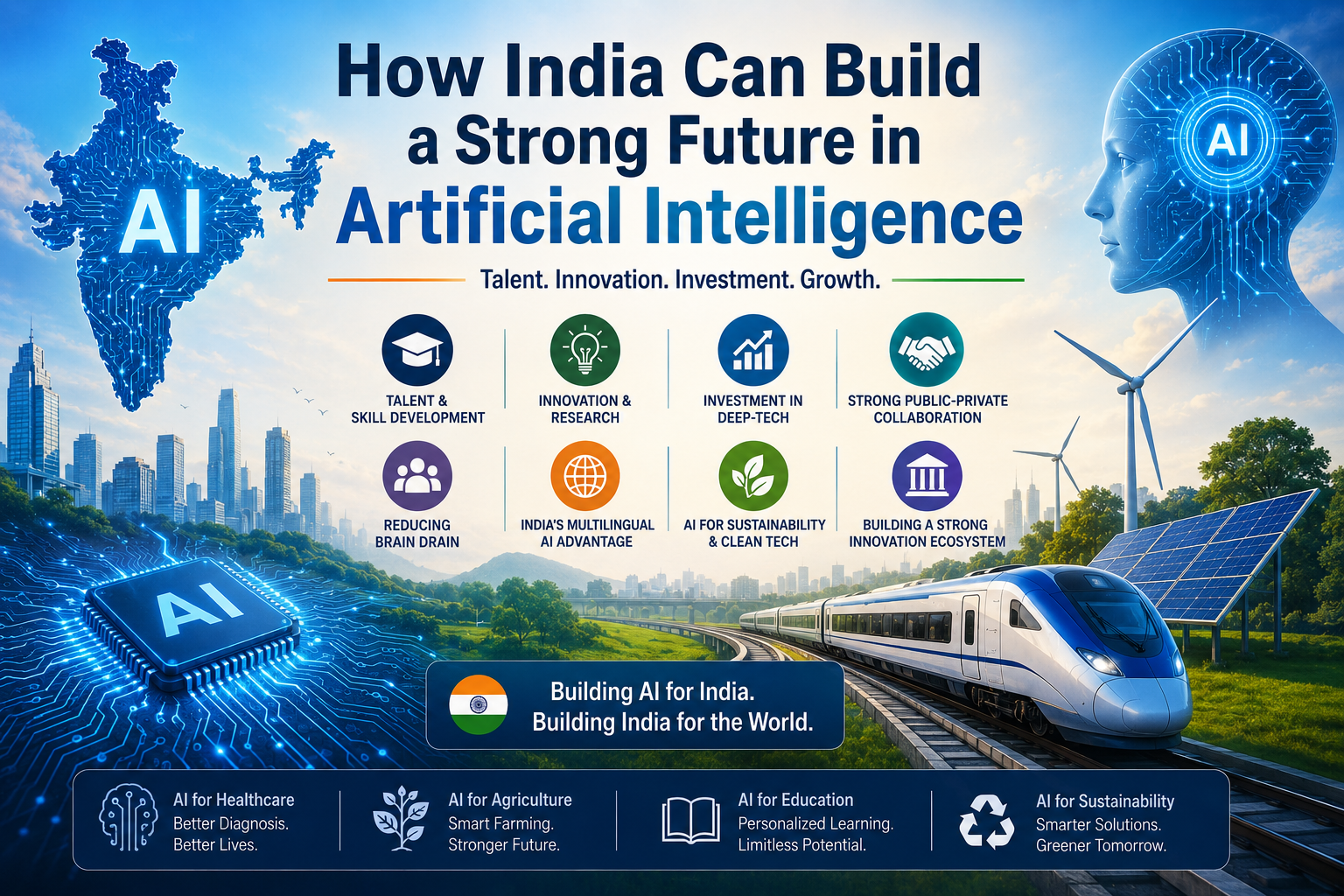
How India Can Build a Strong Future in Artificial Intelligence
India is moving through one of the most important technology shifts in its history. Around the world, countries are investing heavily in artificial intelligence because AI is expected to influence the future of business, healthcare, education, finance, manufacturing, and digital services. Governments and private companies understand that the nations leading in AI today may become the strongest technology economies in the future.
India already has many advantages in this race. The country has a large number of engineers, software developers, researchers, and digital professionals who contribute to global technology companies and innovation projects. Indian talent is respected internationally, and the country’s growing startup ecosystem continues to attract attention from investors and businesses worldwide.
At the same time, India’s digital infrastructure has expanded rapidly over the last decade. Internet access has reached millions of people, digital payments have become common, and online services are now deeply connected to everyday life. These changes have created strong opportunities for advanced technologies and innovation-driven businesses.
However, one challenge continues to affect India’s long-term progress in artificial intelligence. Many highly skilled professionals move abroad in search of better research facilities, stronger career growth, and higher salaries. This movement of talent has become one of the biggest concerns for the future of India’s technology ecosystem.
Artificial Intelligence Is Reshaping Every Industry
Today, artificial intelligence is no longer limited to large technology companies or research laboratories. AI systems are now being used in healthcare, banking, retail, logistics, agriculture, education, and manufacturing. Businesses use AI to improve efficiency, automate repetitive work, and make better decisions through data analysis.
Hospitals use AI tools to assist with medical analysis and patient care. Financial institutions use intelligent systems to improve fraud detection and security. Farmers use smart technologies to monitor weather conditions and crop health. Educational platforms use AI to create personalized learning experiences for students.
Because AI can improve productivity across so many sectors, countries that successfully build strong AI ecosystems may gain major economic and technological advantages in the future.
India’s Digital Growth Creates New Opportunities
India’s rapid digital transformation has created the right environment for AI innovation. Millions of people now use smartphones, online banking, e-commerce platforms, and digital services daily. Businesses are becoming increasingly dependent on digital systems to improve customer experiences and operational efficiency.
This growing digital ecosystem creates demand for smarter technologies and advanced automation systems. Companies want AI-powered tools that can improve speed, reduce costs, and deliver better services. Public institutions also increasingly rely on digital infrastructure to serve large populations more efficiently.
India’s technology environment now provides strong opportunities for startups, researchers, and entrepreneurs working in advanced sectors.
The Challenge of Brain Drain
Despite India’s strong talent base, many engineers, researchers, and AI specialists continue to leave the country for opportunities abroad. International technology hubs often provide better salaries, advanced research infrastructure, and stronger innovation ecosystems.
This trend affects India’s long-term innovation potential because talented professionals contribute more than technical work alone. They also help create startups, conduct research, and develop future technologies. When skilled individuals move abroad, many important ideas and innovations strengthen foreign markets instead of contributing to India’s own growth.
Reducing brain drain requires stronger research support, improved infrastructure, better funding opportunities, and long-term career growth for professionals inside India.
The Importance of Deep-Tech Investment
Artificial intelligence, robotics, predictive systems, and automation all belong to the deep-tech sector. Unlike traditional businesses, deep-tech startups usually require years of research and development before becoming commercially successful.
This is why patient investment and strategic support are extremely important. Investors who understand advanced technologies often focus on long-term innovation rather than short-term profits. Strong investment ecosystems allow startups to develop meaningful technologies and compete globally.
Discussions connected with Rajat Khare Venture Capitalist often focus on the importance of creating stronger support systems for deep-tech startups and advanced innovation. Long-term technology investment can help India build a more sustainable innovation ecosystem and encourage talented entrepreneurs to develop future technologies within the country.
The Growing Role of Boundary Holding in Deep Technology
The global technology industry is increasingly focused on sectors such as artificial intelligence, robotics, cybersecurity, and automation. Organizations linked with rajat khare boundary holding reflect the growing interest in supporting deep-tech innovation and future-focused technologies.
Deep-tech companies often require financial support, technical mentorship, and long-term strategic planning before achieving large-scale success. Investment ecosystems connected with advanced technology sectors help create opportunities for researchers, startup founders, and innovators working on complex technological challenges.
As AI continues to grow globally, investment firms that support advanced technologies may play an important role in shaping the future of innovation and entrepreneurship.
India’s Multilingual Advantage
This creates an opportunity for India to build AI systems that understand local communication styles and cultural contexts more effectively.
Multilingual AI can improve access to healthcare, education, agriculture support, government services, and digital banking for millions of people. It can also help local businesses connect better with regional customers and communities.
This ability to create inclusive AI systems may eventually become one of India’s biggest advantages in the global technology industry.
The Connection Between AI and Sustainable Technology
Technology innovation today is also closely connected with sustainability and environmental responsibility. Artificial intelligence is increasingly being used to improve energy management, industrial efficiency, smart transportation, and environmental monitoring.
Topics connected with Rajat Khare Clean Tech highlight how advanced technologies can support both innovation and sustainable development. AI-powered systems can help businesses reduce waste, improve efficiency, and create smarter resource management systems.
As countries continue focusing on clean technology and sustainable growth, the combination of AI and environmental innovation may create major opportunities for future economic development.
Building a Stronger Innovation Ecosystem
India’s future in artificial intelligence depends on how effectively different parts of the ecosystem work together. Universities need stronger partnerships with industries. Research institutions require better funding and advanced infrastructure. Startups need easier access to capital, mentorship, and technical support.
Government policies also play an important role in encouraging innovation and improving digital infrastructure. Investments in research, education, startup ecosystems, and AI development can help India strengthen its global position in advanced technology sectors.
India can also benefit from stronger collaboration with Indian-origin professionals working abroad. Many experienced experts may still contribute through mentorship, partnerships, and investment support.
Final Thoughts
India already has many of the strengths needed to become a global leader in artificial intelligence and advanced technologies. The country has skilled professionals, a growing digital economy, strong entrepreneurial energy, and expanding interest in innovation-driven industries.
The next step is creating an ecosystem where talented individuals can build successful careers, conduct advanced research, and develop world-class technologies within India itself. Better infrastructure, long-term investment, stronger research support, and collaboration between industries and universities can help reduce brain drain and strengthen the country’s innovation ecosystem.
If India continues investing in future technologies and supporting deep-tech innovation, it can become one of the world’s leading centers for artificial intelligence and digital transformation in the years ahead.
Reference Link: https://www.businesstoday.in/impact-feature/story/rajat-khare-believes-india-can-lead-the-worlds-ai-revolution-by-just-stopping-brain-drain-478096-2025-05-28